Capabilities Software & Systems Work Process Pricing Blog FAQ Call 740-238-8084 Book a Free Call
Websites for Healthcare & Dental

Websites for practices where patient trust is the whole job.

A patient decides whether to call your practice in about three seconds — on a phone, often after hours, often worried. We build dental and medical sites that answer the real questions, make provider credibility obvious, and route requests somewhere sensible.

Indexable treatment pagesMobile-first intakeSecurity-aware formsLocal search
Where practice sites quietly lose patients

Patients are not evaluating your website. They are evaluating your practice.

Every one of these is something we see on real practice sites — and every one changes whether a patient calls you or the next result.

The three-second judgement

A patient compares your site to the last three they opened. A slow load, a stock photo, and no obvious next step is enough to send them back to the search results.

Treatment pages that do not answer anything

A list of services with no explanation of what a visit involves, who it is for, or what happens afterward does not help a nervous patient decide.

Providers who stay invisible

Credentials, experience, and bedside manner are your differentiators — and most practice sites bury all three in a paragraph on the About page.

Appointment requests that dead-end

A generic contact box gives your front desk no context and gives the patient no confidence the request went anywhere.

Sensitive questions through the wrong form

A symptom description, an insurance question, and a request to reschedule are not the same thing. They should not land in the same box with the same assumptions.

Invisible in local search

If your hours, location, and service list disagree with your Google Business Profile, patients choose the practice that looks consistent.

What we build for practices

A site that answers questions and routes people.

Not a brochure. A small system with a job to do: explain, reassure, and move the patient to the right next step.

Provider & team profiles

Credential-forward bios, specialties, and real photos, structured so patients can tell who they would actually be seeing.

Treatment & condition pages

Individual pages for the services you want to be found for, written in plain language and organized around how patients search.

Appointment request flow

A short, purposeful request with the context your front desk needs — and a clear confirmation so the patient is not left guessing.

Deliberate intake handling

We separate ordinary inquiries from anything that touches patient information, and we say plainly what a flow can and cannot safely collect.

Location, hours & new-patient info

Directions, parking, accepted insurance, and first-visit expectations — the details that reduce phone calls and no-shows.

Local & service search

Consistent structured data, a real service list, and pages built to rank for the searches patients actually type in your area.

How we think about intake

Patient information changes the architecture.

Most practice sites treat a clinical question exactly like a request for a callback. We do not. This is the routing we design before we touch a form.

Designed per practice — there is no single correct intake stack.
◑Request
◇Triage
▤Staff
▣Portal
route scheduling request → front desk
route billing question → office manager
route clinical question → do not collect
route records & results → patient portal
note a general form is not a medical record
Plain, not hand-wavy

Three things we will not fudge about healthcare intake.

Compliance language is easy to overstate. We would rather be accurate — even when accuracy is less convenient for a sales page.

01

A general web form is not secure intake.

A form that collects a medical question, an insurance member ID, or a description of symptoms is not the same as a scheduling request. If a flow will create, receive, maintain, or transmit protected health information, it needs safeguards that a normal contact form does not have.

02

A Business Associate Agreement is often part of the answer.

When a vendor handles protected health information on behalf of a covered entity, a Business Associate Agreement is frequently required. We will flag where that is likely and what it means, rather than quietly plugging in a tool and hoping.

03

HTTPS alone does not make a practice compliant.

An SSL certificate encrypts transport. It says nothing about who can access a submission, where it is stored, how long it is kept, or what third-party scripts are reading the page. We will not claim a practice is compliant because the padlock is there.

A note on scope

If a flow needs a vetted intake stack, we will say so.

Sometimes the right recommendation is not a form we build. It is a purpose-built healthcare intake service with the agreements and controls that sensitive information requires.

We identify what would need to be implemented — we do not offer a compliance guarantee.
if the request is administrative
  → a well-built form is fine
if the request may contain ePHI
  → deliberate flow, evaluated vendor, agreement
if we are not the right tool
  → we will tell you exactly that
Proof

A real healthcare site, live right now.

We do not publish patient outcomes or invent statistics. We can show you the site.

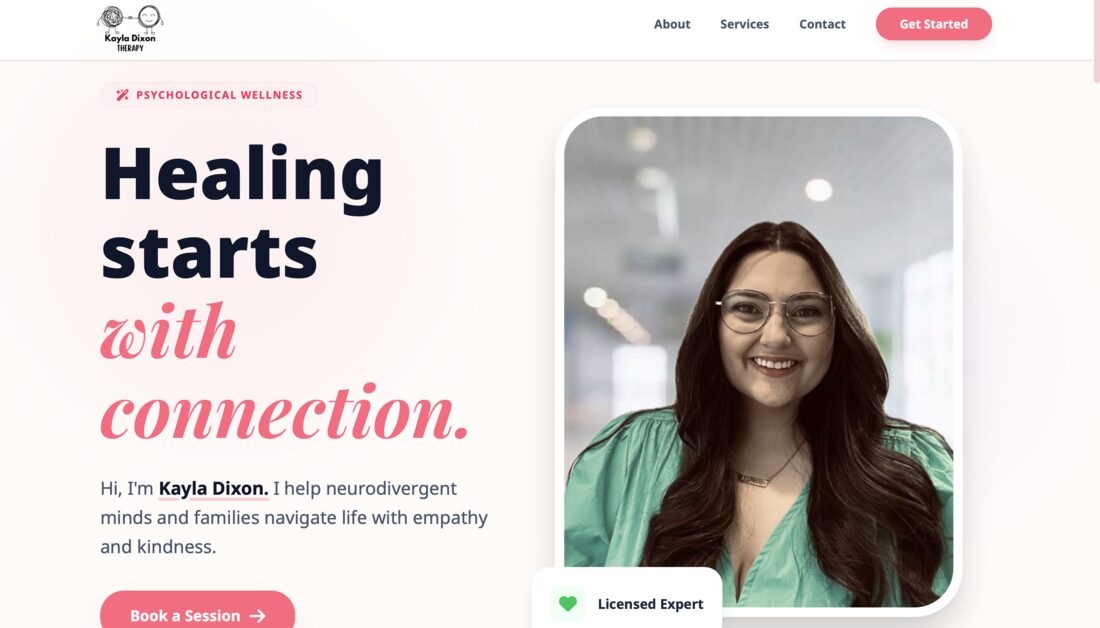
Kayla Dixon Therapy website
Healthcare provider
Kayla Dixon Therapy

A therapy practice site built around calm, clarity, and a low-friction first step — because someone researching a counselor does not need a sales page, they need to feel safe enough to reach out.

AppointmentsTrust-firstMobile
Visit the live site ↗
Why Peak Beak

Built by the person who also builds the systems.

01

You are talking to the engineer

There is no account manager relaying your request. The person scoping, designing, building, and securing the site is the same person you talk to.

02

We build the whole surface

The marketing site, the intake flow, and the systems behind them are one problem, not three vendors. That is why a question about where a form submission actually goes has a real answer.

03

We will tell you when something is out of scope

If a request needs a healthcare-specific vendor, a formal agreement, or legal review, we say so instead of inventing a solution.

Questions owners actually ask

Healthcare questions we get asked

Can my website accept appointment requests securely?+
It can accept requests. Whether that is 'secure' depends entirely on what the request contains. A scheduling request with a name and a callback number is administrative. A message describing symptoms, medications, or treatment is not — and should not be collected by a general contact form. We build the first and are explicit about the limits of the second.
Can you connect my existing patient portal?+
Usually yes — we link to it prominently and consistently rather than trying to rebuild it. If the portal supports branded login or deep links, we wire those in. A portal is the right home for records and results; a website's job is to send patients there safely.
What information should we avoid collecting through a normal form?+
Anything clinical: symptoms, diagnoses, medications, insurance member IDs, or records. A general form should collect what a front desk needs to call someone back — not a medical history.
Does our website need to be HIPAA compliant?+
That depends on your practice and on what the site actually does. HIPAA applies to covered entities and their business associates and governs how electronic protected health information is handled. If a website flow will create, receive, maintain, or transmit ePHI, it needs deliberate safeguards and often vendor agreements. We help you find where that line is — and we do not declare you compliant on your behalf.
Can you write the treatment and service content?+
We can structure it and draft from what you give us, but clinical claims are reviewed and approved by your providers. We do not invent medical statements or make outcome promises.
Will this work for a small practice, not a hospital system?+
That is exactly who we build for. The goal is not enterprise marketing software — it is a fast, credible site a two-provider practice can actually maintain, with one obvious next step for the patient.

Keep reading  Getting found in local search · How much a website costs · See our work

Let's talk

Ready to build a site that earns the appointment?

Book a free 15-minute call. Bring your current site. We will trace how a patient actually finds and contacts you, and flag anything that needs a more careful approach.

Book a call Call